Jump into the fast-paced world of high-speed data communication methods where speed is king and connectivity is key. From industries relying heavily on lightning-fast data transfers to the evolution of communication technologies, this topic is sure to keep you on the edge of your seat.
High-speed Data Communication Methods
In today’s digital age, high-speed data communication methods play a crucial role in ensuring efficient and rapid transmission of information across various platforms. These methods enable quick and reliable exchange of data, making them essential for businesses, organizations, and individuals alike.
Fiber Optic Communication
Fiber optic communication is one of the most widely used high-speed data communication methods. It involves the transmission of data through optical fibers, which are thin strands of glass or plastic that carry light signals. This method allows for faster data transfer rates and greater bandwidth compared to traditional copper wires.
Wireless Communication
Wireless communication technologies, such as Wi-Fi, Bluetooth, and 5G networks, also play a significant role in high-speed data transmission. These methods eliminate the need for physical cables, allowing for greater mobility and flexibility in data exchange. Industries like telecommunications, healthcare, and transportation heavily rely on wireless communication for seamless connectivity.
Satellite Communication
Satellite communication is another high-speed data communication method that uses satellites orbiting the Earth to transmit data signals. This technology is crucial for remote areas or situations where traditional wired or wireless networks are not feasible. Industries like broadcasting, military, and navigation heavily depend on satellite communication for global connectivity.
Importance of High-speed Data Communication
The importance of high-speed data communication in today’s digital world cannot be overstated. It enables real-time collaboration, faster decision-making, and seamless connectivity across the globe. Industries like finance, e-commerce, and cloud computing rely on high-speed data communication to deliver services efficiently and effectively. As technology continues to advance, the demand for faster and more reliable data communication methods will only increase.
Computer Repair and Consulting
When it comes to maintaining optimal system performance, computer repair and consulting professionals play a crucial role in addressing common issues that users encounter. Whether it’s a hardware malfunction or a software glitch, these experts are here to help you get your device back up and running smoothly.
Common Issues Requiring Computer Repair and Consulting Services
- Slow performance: If your computer is running sluggishly, it could be due to malware, a full hard drive, or outdated software.
- Blue screen of death: This dreaded error message can indicate hardware failure, corrupted files, or software conflicts.
- Internet connectivity problems: Issues with your network settings, router, or even your ISP can lead to frustrating connection problems.
- Hardware failures: From a faulty hard drive to a malfunctioning motherboard, hardware issues require expert diagnosis and repair.
Role of Computer Repair and Consulting Professionals
- Diagnosing issues: Professionals can identify the root cause of problems and provide effective solutions.
- Hardware repair: Skilled technicians can replace faulty components and ensure your computer is functioning properly.
- Software troubleshooting: Experts can address software conflicts, remove malware, and update programs to improve performance.
- Data recovery: In cases of data loss, professionals can help retrieve important files and ensure they are safely backed up.
Tips for Choosing a Reliable Computer Repair and Consulting Service Provider
- Check reviews and recommendations: Look for feedback from previous clients to gauge the quality of service.
- Verify certifications and experience: Ensure that the professionals are trained and experienced in handling a variety of computer issues.
- Inquire about pricing and warranties: Understand the cost of services upfront and inquire about any warranty or guarantee offered.
- Ask about turnaround time: Find out how quickly the service provider can address your computer problems to minimize downtime.
Data Communication
Data communication is the process of transferring data or information between devices through a medium such as wires, cables, or wireless signals. It plays a crucial role in enabling the exchange of information between computers, smartphones, servers, and other electronic devices.
Wired vs. Wireless Data Communication
Wired data communication involves physical connections such as Ethernet cables, whereas wireless data communication utilizes radio waves or infrared signals to transmit data. When comparing the two methods:
- Wired communication typically offers faster and more reliable data transfer speeds compared to wireless communication.
- Wireless communication provides more flexibility and convenience in terms of mobility, allowing devices to connect without the need for physical cables.
- Both wired and wireless methods have their advantages and disadvantages, with wired connections being preferred for high-speed, reliable data transfer and wireless connections being more suitable for mobile devices and remote locations.
Evolution of Data Communication Technologies
Over the years, data communication technologies have evolved significantly, leading to faster and more efficient ways of transmitting data. Some key developments include:
- The introduction of the internet and broadband technology, which revolutionized the way data is transmitted over long distances.
- The development of fiber optics, which allows for high-speed data transmission over long distances with minimal signal loss.
- The rise of wireless communication standards such as Wi-Fi and Bluetooth, enabling seamless connectivity between devices without the need for physical cables.
- Ongoing advancements in data encryption and security protocols to protect sensitive information during transmission.
Computers E-Books
In today’s digital age, e-books have revolutionized the way we consume information. With the rise of computer technology, e-books have become increasingly popular due to their convenience and accessibility. Let’s explore the impact of e-books on the world of computers.E-books have several advantages when it comes to reading on computers. One major benefit is the ability to carry thousands of books in a single device, saving space and weight.
E-books also offer interactive features such as hyperlinks, annotations, and search functions, enhancing the reading experience. Additionally, e-books are often more affordable than physical books and can be easily purchased and downloaded instantly.However, there are some disadvantages to consider when reading e-books on computers. Eye strain and discomfort from staring at screens for extended periods can be a concern. Some readers also miss the tactile experience of flipping through pages and the smell of a new book.
Furthermore, technical issues such as compatibility problems or battery life can disrupt the reading experience.Looking towards the future, e-books are expected to continue evolving alongside computer technology. With advancements in e-reader devices and software, e-books will likely become more interactive and customizable. Integrating features like virtual reality and artificial intelligence could enhance the immersive experience of reading e-books. As technology progresses, the line between traditional books and e-books may become increasingly blurred, shaping the future of how we consume information in the digital age.
Advantages of Reading E-Books on Computers
- Portability and convenience of carrying thousands of books in one device
- Interactive features like hyperlinks, annotations, and search functions
- Affordability and instant access to a wide range of titles
Disadvantages of Reading E-Books on Computers
- Eye strain and discomfort from prolonged screen time
- Lack of tactile experience compared to physical books
- Technical issues like compatibility problems or battery life concerns
Future of E-Books in Relation to Computer Technology
- Advancements in e-reader devices and software for more interactive and customizable reading experiences
- Potential integration of virtual reality and artificial intelligence to enhance e-book immersion
- The blurring line between traditional books and e-books as technology progresses
Graphics and Multimedia
Graphics and multimedia play a crucial role in enhancing user experience on computers by providing visually engaging and interactive content. High-quality graphics and multimedia elements can make interfaces more appealing, improve communication of information, and create a more immersive user experience.
Role of Graphics and Multimedia in Enhancing User Experience
- Graphics and multimedia elements make interfaces more visually appealing and engaging for users.
- They help in conveying information more effectively and efficiently through images, videos, animations, and audio.
- Interactive multimedia elements enhance user engagement and interaction with the content.
Contribution of High-speed Data Communication Methods to Seamless Multimedia Streaming
- High-speed data communication methods, such as fiber optic networks and 5G technology, ensure faster data transmission rates, reducing buffering and lag during multimedia streaming.
- With high-speed data communication, users can enjoy high-definition videos, smooth animations, and crystal-clear audio without interruptions.
- Seamless multimedia streaming enhances the overall user experience and satisfaction.
Popular Software for Graphics and Multimedia Design
- Adobe Creative Cloud: A comprehensive suite of software for graphic design, video editing, web development, and photography.
- Autodesk Maya: A powerful 3D animation software used for creating visual effects, animations, and simulations.
- Final Cut Pro: A professional video editing software for macOS users, offering advanced editing tools and effects.
Computers Hardware
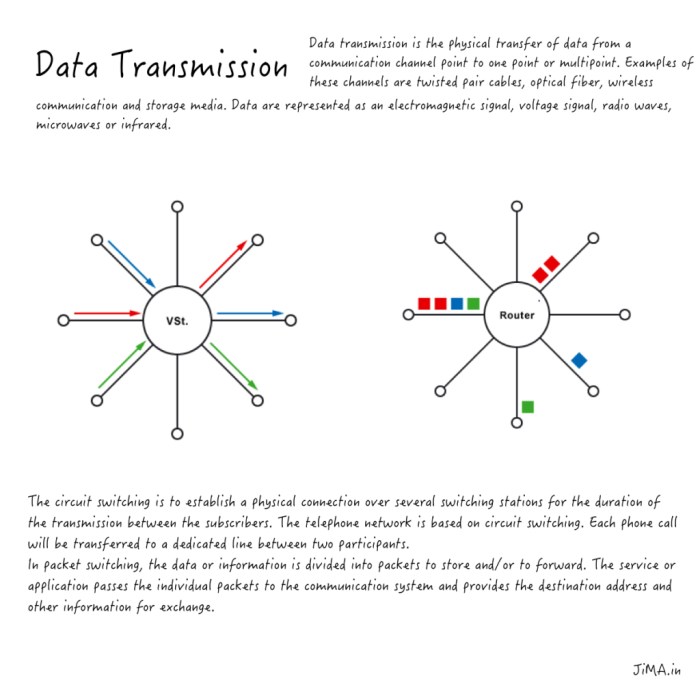
When it comes to high-speed data communication in computers, having the right hardware components is crucial. These components play a significant role in determining the data transfer speeds and overall performance of the system. Regular maintenance of computer hardware is also essential to ensure optimal functionality and prevent any issues that may arise.
Essential Hardware Components for High-speed Data Communication
- Network Interface Card (NIC): This hardware component allows for the connection of the computer to a network and is essential for data communication.
- Processor (CPU): The CPU processes all the data in the computer, including data being transmitted or received, influencing the speed of data communication.
- Random Access Memory (RAM): The amount and speed of RAM in a computer affect how quickly data can be accessed and transferred.
- Storage Devices (HDD/SSD): The type and speed of storage devices impact how quickly data can be read or written, affecting data communication speeds.
- Motherboard: The motherboard connects all the hardware components in a computer and plays a crucial role in data transfer speeds.
Comparison of Computer Hardware for Data Transfer Speeds
- SSD vs. HDD: Solid State Drives (SSDs) are faster than Hard Disk Drives (HDDs) due to their lack of moving parts, resulting in quicker data access and transfer speeds.
- Dual vs. Quad-core Processors: Quad-core processors can handle more data simultaneously compared to dual-core processors, leading to faster data processing and communication.
- DDR3 vs. DDR4 RAM: DDR4 RAM is faster and more efficient than DDR3 RAM, allowing for quicker data access and transfer speeds.
Importance of Regular Maintenance for Computer Hardware
Regular maintenance of computer hardware is crucial to ensure optimal performance and prevent any hardware-related issues that may impact data communication speeds. This includes cleaning dust from components, updating drivers, and monitoring hardware temperatures to prevent overheating, all of which contribute to the smooth operation of the system.
Final Summary
As we wrap up our journey through the realm of high-speed data communication methods, one thing is clear – the future is bright, fast, and incredibly connected. Stay tuned for more updates on this exciting technological landscape!
Question & Answer Hub
How do high-speed data communication methods impact modern industries?
High-speed data communication methods revolutionize industries by enabling quick and efficient data transfers, enhancing productivity, and driving innovation.
What are the key differences between wired and wireless data communication methods?
Wired methods offer more stability and speed, while wireless methods provide flexibility and convenience but may have limitations in terms of speed and reliability.
Why is regular maintenance crucial for computer hardware in high-speed data communication?
Regular maintenance ensures that hardware components function optimally, leading to consistent high-speed data communication and overall system performance.